Translate

Showing posts with label Haiti. Show all posts

10.20.2017

A Haitian Treasure (with a Sensitive History): Pèsi (Parsley)

Today, I'd like to talk about an herb that every Haitian is intimately familiar with; parsley, known as "pèsi" in Haitian kreyol or "persil" in French. This beloved herb is a key ingredient in the versatile and delicious Haitian spice marinade, knows as epis. In this way, Haitians essentially consume parsley literally every day. But did you know that parsley is not only an important culinary herb, but an incredibly detoxifying and healing herb as well? Did you also know that this herb is steeped in a deeply wounding and tragic history for the Haitian people?
Parsley, Petroselinum crispum, is an herb native to the Mediterranean, and is now grown all over the world. This herb grows very well in a variety of climates and can be found in pretty much any grocery store. Pèsi is a very pretty green plant with decorative flowery leaves. It has a lovely subtle aromatic and slightly sweet taste to it.

I learned in Naturopathic medical school that parsley leaves are mildly diuretic, which means parsley supports the body's process of eliminating fluid. You can see how this can be helpful in conditions such as BPH (benign prostatic hyperplasia), congestive heart failure, or mild edema.  Parsley root, on the other hand, is really helpful for treating kidney stones. This herb has an affinity for the urinary tract, making it handy for treating mild kidney pathologies (in addition of course to necessary medicine and monitoring).

Parsley is incredibly rich with vitamins and nutrients, and has a great ability to cleanse the body, making it an awesome addition to detoxification protocols, which I can walk you through. There's a ton of research on parsley's very wide range of medicinal properties. Studies show that Pèsi has anti-oxidant, hypotensive, liver-protective, and anti-diabetic properties, just to name a few.

Important constituents:
  • apiol (one of the most studied constituents; an essential oil)
  • terpenes
  • flavonoids
  • vitamins A,B,C
  • many minerals including iron, potassium, iodine, sulphur, etc.


I cannot talk about Parsley, in the context of being a Haitian treasure, without highlighting its important role within Haitian and Dominican history. You may or may not have heard of something called "The Parsley Massacre"; a historical "ethnic cleansing" of Haitians and Haitian-Dominicans in the Dominican Republic, ordered by then dictator Rafael Trujillo in October 1937, to "solve an economic crisis".  This slaughtering of an estimated 10,000-20,000 people centered around a presumed Haitian's inability to pronounce the word "perejil"; the Spanish word for parsley. Haitians and those of Haitian descent living in the Dominican Republic were ordered to pronounce the word, and if they were unable to pronounce the "r" with the rolling sound characteristic of the Spanish language, they were executed on the spot. There is so much more to say about this but if you would like to learn more, there are plenty of resources available to you. For one, you can ask a parent or grandparent about this. I have had heart-breaking conversations about this event with my grandmother, who was a pre-teen, when it occurred  One of the most powerful resources I came across which centers around this event is Edwidge Danticat's fictional novel, "The Farming of Bones".

Interesting and disturbing fact that I discovered through conversation, then later through research, is that dictator Trujillo's grandmother was actually of Haitian descent; in fact both of her parents were Haitian. 

Personally, every time I even look at or touch parsley, I take a quick moment to honor my Haitian ancestors. It's tough for me to work with this herb, without recognizing its significance in my people's history, especially since we work so intimately with it. 

Nevertheless, parsley is an incredible herb really worth highlighting.

Take an exhale to process if you need to. Let's carry on.

Image source: Google Images


How to prepare?

Recipe 1: Detoxifying parsley tea
  1. Take 5-10 fresh parsley stems
  2. Boil 1 cup of water
  3. Let parsley sit in boiling water for 10-15 minutes
  4. Strain, cool, and drink!
There is no need to sweeten medicinal tea, but if you must, try a little bit of honey or some stevia.

Recipe 2: Parsley green juice

This is my favorite way to use parsley.

Using a juicer, combine the following ingredients:
  • 1 bunch of fresh parsley
  • 1 green apple
  • 1 cucumber
  • 1/4 inch of ginger
I hope you enjoy using pèsi as much as my people and I do.

In health,
Dr. Naika

The "Haitian Treasures" series was created by Dr. Naika in 2012. This series explores the magnificent benefits and uses of Haiti's natural resources, which Dr. Naika calls "Haitian Treasures". In this series, Dr. Naika explores the tie between Haiti's natural resources and natural, traditional, and holistic healing.

This blog post was originally posted on Dr. Naika's lifestyle blog, Naika in Balance. Dr. Naika's work is copyrighted. Please do not copy or repost Dr. Naika's work without citing her content as the original source. 

10.11.2017

Collaboration with NYU: Mother Tongues United

Hello! If you follow me on social media, you'll know by now that I'll be speaking at NYU this coming Friday! I'll be talking about my journey into Naturopathic Medicine and Acupuncture, and how my Haitian identity inspired that journey/frames my current work. This will be my first speaking engagement as a Doctor and I'm really looking forward to it.

 Check out the flyer below! If you are in the New York area, definitely come on by, and make sure to say hi!

Thank you to NYU's Center for Latin American and Caribbean Studies (CLACS) for having me!

In health.
Stay engaged,
N


Connect with me!

12.29.2016

A Haitian Treasure: Asowosi or Asosi (Bitter Melon)

Asowosi is known as bitter melon in English and Ku gua in Chinese. I'm really excited to write about this herb because it is one that I use in both the Naturopathic and the East Asian Medicine clinic very often. The latin name is Momordica charantia L. and it is in the Cucurbitaceae family, like other melons. It grows abundantly in Bangladesh, India, Pakistan, Nepal, China, Vietnam, Jamaica and of course, our beloved Haiti. It can be consumed at all stages, but is most palatable in its early yellow and green stage.
Image source: Google search
Haitians use asowosi for many many things, but mainly for blood sugar management and to reduce fevers. In some parts of Haiti, it is referred to as yesken. It is most commonly consumed as a tea in Haiti.  The Chinese used it for similar reasons, but also for liver tonification and clearing inflammation. It will never cease to amaze me how different cultures, separated by time and space, were and are so in sync with each other.

Bitter melon contains high levels of Vitamin K, vitamin B, iron, calcium and minerals. It also contains peptides, saponins, and glycosides that are hypoglycemic, meaning that these compounds lower blood sugar. Diabetes mellitus type II is a complex disease pattern, but at its core is a dysfunction in blood sugar regulation. So you can imagine how a blood sugar lowering herb can help someone with diabetes. This Haitian treasure helps increase insulin sensitivity and uptake, which is incredibly important, as insulin is what clears sugar from the blood. Asowosi helps preserve cellular function and is a wonderful anti-oxidant. Asowosi is detoxifying and cleansing, so it can help support your liver, and thus your skin.

Bitter Melon can be helpful for the following conditions:
- diabetes
- ulcers
- colitis
- high cholesterol
- kidney stones
- hypertension (and hypertension related headaches)
- constipation
Image source: Google search
There are many ways you can prepare this fruit. I fondly remember my Chinese nutrition teacher bringing in this fruit, chopping it up, and making us try it. As the name clearly points out, this fruit is very bitter, so brace yourself. But it is also really cooling, which fits in with its yin picture. The fruit isn't the only powerful part of asowosi; you can also consume the leaves, flowers, and seeds.

Methods of consumption:
- chop it up into slices and eat as is
- boil the slices in water and drink the liquid as a tea (don't sweeten with sugar to defeat the purpose!)
- juice the melon
- sauté it with other foods, preferably pungent ones (for energetic balance from a Chinese perspective)
- consume it in high grade capsule form
Image source: Google search
I want to emphasize that it is so important to monitor your blood sugar, if you have a diagnoses of Diabetes, and to make sure you are properly managed. The major side effect of consuming a blood sugar lowering plant like asowosi is of course that your blood sugar could get too low. And we want to avoid that all costs.

In health,
Dr. Naika

The "Haitian Treasures" series was created by Dr. Naika in 2012. This series explores the magnificent benefits and uses of Haiti's natural resources, which Dr. Naika calls "Haitian Treasures". In this series, Dr. Naika explores the tie between Haiti's natural resources and natural, traditional, and holistic healing.

This blog post was originally posted on Dr. Naika's lifestyle blog, Naika in Balance. Dr. Naika's work is copyrighted. Please do not copy or repost Dr. Naika's work without citing her content as the original source. 

4.06.2014

A Haitian Treasure: Charcoal (Chabon) for Natural Teeth-Whitening

Reminder: My work is copyrighted. Please do not copy or repost my work without citing this as a source. 

I know I'm not the only Haitian-American kid who used/uses charcoal for teeth-whitneing. What can I say? It's the Haitian in me. As a kid, whenever my teeth would get a bit trop jaune (too yellow), my mom would chase after me saying, "Here, here! Use the charcoal! Get the chabon!This is how we do it in Haiti". And I'd get really excited. Of course when I was really young, I thought it was kind of weird, and wondered if the other kids brushed their teeth with this magical black rock brought from a special land, far far away....Haiti. But, then I'd snap out of it, dazzled by this cool cultural tradition that made me unique, and I'd get excited all over again. I vividly remember the splashes of black displayed in the bathroom sink after the cleanings, as well as my crazy looking black teeth before rinsing the chabon out. I always got a kick out of that. I still do....
Image from Google
Similarly to l'huile mascreti (Haitian castor oil), there's always some Haitian charcoal lying around a typical Haitian household. I guess because there's always someone going to Haiti and bringing us back these goodies. Luckily whenever I go back home to NY or have my mom visit me in Seattle, she replenishes my chabon stash.

My newest and biggest piece of Haitian charcoal :)
Decades later, cleaning my teeth with Haitian charcoal (chabon) is still a time-honored tradition that I partake in when my teeth are looking just a tad trop jaune. I look forward to passing this Haitian tradition to my kids, if I have any. For now, I'll settle with sharing this tradition with all of you!

Let's talk about some of the awesome benefits!

So what is charcoal?
It is nothing but burned wood or other plant material! Simple as that. What we really use is activated charcoal (activated carbon...hence the word, chabon), which is just regular charcoal that has been exposed to air and steam at elevated temperatures, which not only purifies it, but increases its surface area, makes it better at absorbing compounds, and enhances its overall properties!

Fun fact: Haitians have been using charcoal forever for teeth cleaning, but many other cultures have traditionally ingested charcoal for an antedote against food poisoning which is super cool! In fact, many hospitals all over the word currently keep some charcoal on hand to treat people in the emergency room who are suffering from food poisoning.

Umm, so how exactly does charcoal whiten teeth?
Charcoal is really good at absorbing materials because of its purification process, as mentioned above. The porous surface of the charcoal attracts materials into its pores. Luckily, once we rinse our mouths, the charcoal leaves with all of the toxins and other materials it absorbed (i.e, food particles, tannins, microbes, etc.)


How to use chabon to whiten your teeth?
Some of us Haitians brush with charcoal FIRST and then with toothpaste. Some with toothpaste FIRST then with charcoal. And some just brush all together with the charcoal on TOP of the toothpaste. Try all these methods! Figure out what works best for you.
  1. Crush a small piece of charcoal into a finer consistency, like that of sand. This will make it stick to your toothbrush easier.
  2. Tap your toothbrush on the fine pieces of charcoal
  3. Brush brush brush for a good 30 seconds- 1 minute
  4. Rinse as usual
  5. Clean your mouth and sink really well! Chabon is really good at sticking to things, making it difficult to remove so this step is super important.
  6. Admire your shiny white teeth!
 
Do you use chabon for teeth whitening? If so, please share your experiences!

Please note: The cultural anthropologist and socially engaged person within me can't help but mention that because charcoal is the product of burned wood and plants, that has implications on green life and agriculture. Makes sense right? And in a place like Haiti, where deforestation is such a big issue, I think it's really important to think about where our charcoal is coming from and supporting re-forestation efforts in Haiti, as well as considering alternatives to the standard charcoal production methods (of which there are many, thank goodness). Lastly, the future healthcare provider in me can't help but put in a plug for extra protection for charcoal-handlers, since a tremendous amount of smoke and volatile compounds are released during the charcoal making process.  It is my sincere hope that charcoal-handles have access to the necessary safety equipment for their health. That is a public/individual health concern!


Stay engaged,
N
Order a custom herbal tea blend from me by clicking here.


Connect with me!


The "Haitian Treasures" series explores the magnificent benefits and uses of Haiti's natural resources, which I call "Haitian Treasures" because they are truly national gems.  Naïka in Balance is the premiere source for information on healing herbs used by Haitians. In this series, I explore the tie between Haiti's natural resources and natural, traditional, and holistic healing.

Learn about other Haitian Treasures explored on this blog here!

The two most popular Haitian Treasures on this blog are:

Castor oil/l'huile palma christi
Wonder of the world plant/fey lougawou


Naika, the writer of this blog, has a doctorate in Naturopathic Medicine and a Masters of Science in Acupuncture as of June 2017. Please do not take the information presented on this blog, as medical advice, without consulting your certified health care practitioner. Knowledge is power and your health is your wealth!

7.24.2013

A Haitian Treasure: Moringa (Benzoliv)

Common name: Moringa
Latin name: Moringa Oleifera
Haitian name: Pye pwa mirak or Benzoliv

What is it good for? Nutrition Nutrition Nutrition! Moringa is extremely high in protein, vitamins A and C, calcium, potassium, and iron. It also contains all essential amino acids.

Moringa is considered a miracle plant since every part of it has a specific use. It's amazing how medicinal the root, seed, flower, and pods all are. Moringa is used for medicine and nutrition, and even to purify water. Moringa has even been studied more closely for its use as biodiesel.


In Haiti, the moringa flowers are often used to treat colds and to improve circulation and immunity. Haitians make tea and soup with moringa, and also put it in mayi moulen.

Other thoughts: Moringa is known to have the ability to combat malnutrition, which is so amazing I think it's super important to take care of our individual and communal health. I have to say I am also interested in the socio-economic opportunities that moringa can provide to Haiti, and I give props to the Haitian-led initiatives underway to plant moringa. The moringa tree is very resilient, as it can grow in a variety of climates and in the harshest of conditions, which is a plus for a deforested place like Haiti. People all over the world are fans of moringa and I believe that Haiti can jump on the bandwagon and become a world-class producer of this amazing plant.

In health,
Dr. Naika

The "Haitian Treasures" series was created by Dr. Naika in 2012. This series explores the magnificent benefits and uses of Haiti's natural resources, which Dr. Naika calls "Haitian Treasures". In this series, Dr. Naika explores the tie between Haiti's natural resources and natural, traditional, and holistic healing.

This blog post was originally posted on Dr. Naika's lifestyle blog, Naika in Balance. Dr. Naika's work is copyrighted. Please do not copy or repost Dr. Naika's work without citing her content as the original source. 

7.18.2013

A Haitian Treasure Snapshot: Anis (Star Anise)

Anis:
Latin name: Pimpinella anisum
Kreyol name: Anise

General uses: for cooking (very sweet and aromatic nature), making alcohol, and natural medicine.

Medicinal uses: improves gastrointestinal problems, stimulates lactation (phytoestrogen), treats menstrual cramps.

What makes anis a Haitian treasure?
It is used in yummy treats like akasan and kremas. It is commonly known to treat nausea and vomiting.


In health,
Dr. Naika

The "Haitian Treasures" series was created by Dr. Naika in 2012. This series explores the magnificent benefits and uses of Haiti's natural resources, which Dr. Naika calls "Haitian Treasures". In this series, Dr. Naika explores the tie between Haiti's natural resources and natural, traditional, and holistic healing.

This blog post was originally posted on Dr. Naika's lifestyle blog, Naika in Balance. Dr. Naika's work is copyrighted. Please do not copy or repost Dr. Naika's work without citing her content as the original source. 

1.13.2013

20 Things I Do to Feel More Haitian

1. Eat soup joumou....
....and other authentically Haitian foods (some of which I actually don't like as much as I pretend to like akra, yam, akasan, and boiled eggs + salty fish+ beets for Easter. Sorry grandma..but don't worry, I'll still clean my plate when I come visit. :)).

2. Prioritize what holiday January 1st really represents...
Haitian Independence Day > New Years Day.

3. Kiss people on the cheeks...
....even if they don't seem like the cheek-kissing type, and especially if they've openly identified themselves as Haitian.

4. Say "Sak pase????!!!".....
....sure it's a little blan to do since there are other more common phrases Haitians actually use to greet each other, but nothing quite says Haitian like "sak pase?! n'ap boule!".

5. Use l'huile mascreti (castor oil)...for....everything....
...what doesn't this wonder oil work for?! Good for headaches, hair growth, digestion, toe fungus? (Ew). Yup.

6. Boil tea when I'm sick...
....what else would I do when I'm sick?

7. Use my Haitian 5th sense....
....which is the ability to identify Haitians instantly. If you're Haitian, you definitely have this gift too.

8. Greet everyone I suspect to be Haitian (and try to be their friend)....
....naturally once I've identified you as Haitian, I just have to try and get to know you. Automatic cool points. :)

9. Prepare all food and drinks the Haitian way...
....What's rice pudding without carnation milk and anise? What's tuna fish without hot sauce, salt, pepper and lemon? What's lemonade without vanilla essence? What's ANY savory dish without MAGGI? And why is Haitian bread so darn good?....

7.05.2012

A Haitian Treasure: Fey Lougawou (Wonder of the World Plant)

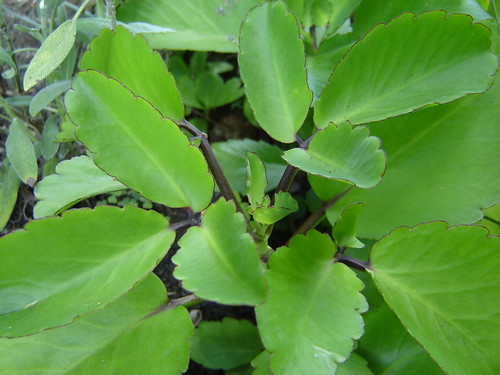
In Haiti, there is a plant called fey lougawou (Kalanchoe pinnata), which is celebrated for its curing capabilities. This plant is known as Miracle Leaf, Life Plant and Wonder of the World in English. This succulent plant is native to Madagascar, but has become naturalized in Asia, the Pacific, and all over the Caribbean, especially in Haiti. It has an amazing ability to replicate over and over again. This plant is known to grown any and everywhere; all it needs is the tiniest bit of soil. A new plant will begin to grow by itself without water in just a few days; I have seen this many times.

People are usually able to identify this plant based on miniature platelets which form on the margins of its leaves.  Fey lougawou is not only a Haitian treasure, but a world treasure too. 
Source
In Haiti, fey lougawou is known for treating everything.

This plant is most popular for treating headaches, sinuses, colds, and most of all hypertension.  Seeing as this plant has the ability replicate by itself, fey lougawou is readily available in Haiti. Fey lougawou is most commonly consumed as a leaf infusion or tea, but it can also be applied topically to alleviate muscle aches. In Haiti, some combine the crushed leaves with lard to form a paste, that can supposedly cure different types of body aches. Another option is to heat the leaves, then place a heat pad or a hot water bottle on top to release its healing properties, then put everything on the aching body part.

My Fey Lougawou Plant
Main Constituents:
  • bryophillin A and C: anti-carcinogenic
  • beta-carotene
Some Benefits:
  • anti-bacterial, anti-rheumatic, anti-hypertensive
  • used to treat upper respiratory infections
  • can cure a variety of body aches
  • A 2012 study showed that this amazing plant is a rich source of T-Cell suppressive flavonoids, meaning it has serious anti-cancer properties. Wow!
  • reduces blood pressure
Some Uses:
  • can be applied topically to hemorrhoids, wounds cuts, ulcers, etc.
  • drink as a tea
  • can be applied to various body parts to alleviate aches and pains
  • for a relaxing foot soak, place a few leaves in a basin filled with hot water, adding calming essential oils for an extra oomph

In health,
Dr. Naika

The "Haitian Treasures" series was created by Dr. Naika in 2012. This series explores the magnificent benefits and uses of Haiti's natural resources, which Dr. Naika calls "Haitian Treasures". In this series, Dr. Naika explores the tie between Haiti's natural resources and natural, traditional, and holistic healing.

This blog post was originally posted on Dr. Naika's lifestyle blog, Naika in Balance. Dr. Naika's work is copyrighted. Please do not copy or repost Dr. Naika's work without citing her content as the original source. 

6.27.2012

A Haitian Treasure Profile: Fey Lang Chat (Catnip)

Catnip or catmint, Nepata cataria, is a mint plant native to Asia and Europe, but is found all over the world.  It is probably one of the only plants that can be instantly associated with cats (it is a "recreational substance" containing a feline attractant that affects 2/3 of all cats), can treat a wide variety of ailments, and is a mild hallucinogen.  Humans typically consume catnip as a tea, juice, tincture, or infusion. In Haiti, catnip is called fey lang chat, and is considered to be a powerful herb with many uses, like for treating colds and coughs.

Catnip is most commonly consumed as a tea, made from crushing the leaves, to treat colds and the flu, to calm colic in babies, to eliminate gas and upset stomach, to stop convulsions and most importantly, to "cleanse the blood". Haitians believe that giving babies catnip tea can remove the impurities from their blood.
Constituents:
  • nepetalactone (mild haluciinagen)
  • acetic acid
  • citronella
Some benefits and uses:
  • natural sedative, antiseptic, antispasmodic
  • cures indigestion and nausea
  • natural astringent
  • reduces fever
  • natural insect repellant
  • can treat insomnia, anxiety, and nervousness

In health,
Dr. Naika

The "Haitian Treasures" series was created by Dr. Naika in 2012. This series explores the magnificent benefits and uses of Haiti's natural resources, which Dr. Naika calls "Haitian Treasures". In this series, Dr. Naika explores the tie between Haiti's natural resources and natural, traditional, and holistic healing.

This blog post was originally posted on Dr. Naika's lifestyle blog, Naika in Balance. Dr. Naika's work is copyrighted. Please do not copy or repost Dr. Naika's work without citing her content as the original source. 

6.13.2012

A Haitian Treasure: Senna

Senna is a large genus of flowering plants native to the tropics. Senna is a low-branching shrub with oval-shaped dark green leaves and lovely yellow flowers which bloom in the spring and summer. The Senna domingensis species is specifically found in Haiti, where it unfortunately is a threatened species. Senna has many names in Haitian Kreyol and French, including Bentamaré, Café bâtard, Casse-puante, & Dartrier. Senna serves as a beautiful ornamental plant, but it also is used as a thickening agent, as neutral henna, and in traditional medicine.  The power is in the pods and the fruits of the senna plant, which have similar effects to that of aloe (also found in Haiti).

In Haiti, it is really common to take senna tea as an effective laxative. It is superb at relieving constipation. Senna is also known in Haiti for its excellent ability to expel stomach worms. Lastly, senna tea is often given to women right after childbirth as a way to relieve them of stress and tension.  Senna is commonly found in liquid, powder, and tea forms.

Again, Senna is a threatened species in Haiti, but that doesn't mean that we can't reverse the damage and protect the species. Senna is incredibly valuable in the modern health market today. What people may not know is that Senna is the main ingredient in many common laxatives sold all over the world, especially in all of those "dieter's teas".  It acts as a stimulant to reduce the dieter's appetite and its laxative properties cause food to move through the system quicker than the food from the calories can be absorbed.

Image Source: Verboga
Key Constituents:
  • Anthroquinones
  • Sennasides
  • Rhenins
Some benefits:
  • anti-fungal, anti-spasmodic, anti-inflammatory
  • decreases fever
  • natural purgative
  • natural laxative
  • cleanses the intestines
Suggested uses:
  • as a tea
  • as a hair treatment
In health,
Dr. Naika

The "Haitian Treasures" series was created by Dr. Naika in 2012. This series explores the magnificent benefits and uses of Haiti's natural resources, which Dr. Naika calls "Haitian Treasures". In this series, Dr. Naika explores the tie between Haiti's natural resources and natural, traditional, and holistic healing.

This blog post was originally posted on Dr. Naika's lifestyle blog, Naika in Balance. Dr. Naika's work is copyrighted. Please do not copy or repost Dr. Naika's work without citing her content as the original source. 

5.21.2012

A Haitian Treasure: Kalbas (Calabash)

Calabash or Kalbas (in Haitian Kreyol), Lagenaria siceraria, is a member of the gourd family.  It is a small evergreen tropical tree with simple leaves and a rough bark.  Its fruits are light green, with white flesh and smooth skin. The fruit has a remarkable likeness to the shapes of bottles and bowls, with ranging lengths, widths, and colors depending on its variants. Kalbas is thought to be one of the first cultivated plants in the world, originating tens of thousands of years ago.  It is also believed to be a spiritual fruit, since it has incredible significance in a variety of world religions. Kalbas is grown all over the world, including Haiti.
Source
Kalbas has special significance to the Haitian culture and the Voodoo religion.  In Haiti, the fruit is often called kalbas kouran, which translates to "running calabash".  This kalbas is used to make a "sacred rattle" in the Voodoo religion, called an asson, which summons the lwa. In the book, Haiti, Hisotry, and the Gods, Joseph Dayan presents a scenario where the calabash tree, also known as repossi, is described as a place were the spirits dwell, and as a source of strength, endurance, and protection.  It is also described as a means to transport sugar cane, palma christi oil, and milk.

Fun fact: Do you know how the Haitian currency got the name gourde? Well, calabash, a gourd, was once the national currency in the 1800's.  It had so much importance that the great King Henry Christophe of Haiti once declared that all gourds must become property of the state.
In Haiti, as in many other countries in the Caribbean, one of the biggest uses of kalbas is in the arts, where it is used to create everything from utensils and water jugs, to maracas and drums, to handbags and canvases, to masks and bongs. The list of kalbas' uses go on and on. There are plenty of Haitian sites and stores where you can view and purchase Calabash art.

Now let's talk about the healing benefits of Calabash.


Some Benefits:
  • anti-hypertensive
  • high in dietary fiber
  • contains Vitamin B and C, as well as minerals and trace elements
  • restores liver function
  • redices constipation

Suggested uses:
  • as a culinary ingredient
  • as a tea or syrup made from the leaf

In health,
Dr. Naika

The "Haitian Treasures" series was created by Dr. Naika in 2012. This series explores the magnificent benefits and uses of Haiti's natural resources, which Dr. Naika calls "Haitian Treasures". In this series, Dr. Naika explores the tie between Haiti's natural resources and natural, traditional, and holistic healing.

This blog post was originally posted on Dr. Naika's lifestyle blog, Naika in Balance. Dr. Naika's work is copyrighted. Please do not copy or repost Dr. Naika's work without citing her content as the original source. 

4.03.2012

A Haitian Treasure: Jirof (Clove)

Cloves (Syzygium aromaticum), coming from the Latin word for 'nail' clovus, are the dried, immature, and unopened aromatic flower buds of a tropical tree, native to Eastern Asia.  Cloves are cultivated mostly in Brazil, the West Indies (including Haiti), Tanzania, Madagscar and India. When fresh, they are pink, and turn to a dark rust-brown color when dried. Cloves are known for having a distinctly strong flavour, making them particularly popular in certain types of cuisine, like the delicious Haitian Cuisine.  In Haitian Kreyol, cloves are known as jirof or jiwof and in French as girofles. Cloves have great historical significance and have been important to so many cultures for thousands of years. Clove is more popular than you might know. Do you like chai tea? Well, one of the main ingredients in chai tea is clove. Did you use glue in kindergarten? Clove oil. In the Middle East, crushed cloves are used to manufacture special clove cigarettes called kretek. Are you Haitian too? Asides from culinary uses, Haitians use jirof as a form of traditional medicine as well. Jirof can be boiled to make a tea that is especially good at relieving stomach pain.


Clove is one of the most common spices used in Haitian cuisine. Because cloves are so potent, only a few pieces are needed to give mega flavor to a dish. Cloves blend beautifully with a variety of herbs and spices which is another reason why they are so popular. Cloves are in all of your quintessential Haitian treats. like diri ak djon djon, jambon, mayi moulen, griyo, kremas etc. As a kid, I remember accidentally biting on cloves in these different dishes and literally crying with frustration because it tasted so bad. I'm sure all Haitian kids have had this experience. It's quite inevitable actually.  My cousins and I used to try and pick them out before eating any of our grandma's dishes because we knew they had to be in there somewhere!
Pickliz (Haitian coleslaw)
Mayi Moulen (cornmeal)
Some benefits:
  • In many traditional healing systems, cloves are believed to increase heat in the body's system, which is useful for stimulating the digestive tract
  • Good source of dietary fiber, Vitamin C, calcium, magnesium, and omega- 3 fatty acids
  • is one of the most popular substances in toothpaste, laxative pills and local anesthetics (Clovacaine)
  • can be a natural tooth filling when mixed with zinc oxide, under proper dental guidance
  • can be used to treat minor respiratory ailments
  • can relieve toothaches and decrease infections in the teeth due to its antiseptic properties
  • can reduce blood sugar levels
  • can freshen breathe when chewed
  • natural anti-oxidant, anti-histamine and anti-microbial
  • historical aphrodisiac
Suggested uses
  • as a pain-killer
  • as an anti-parasitic
  • as aromatherapy
  • can be applied topically as an oil or cream for hypotonic muscles
  • popular seasoning
  • used to preserve food
  • used in perfume
  • can be made into tea and liquor
In health,
Dr. Naika

The "Haitian Treasures" series was created by Dr. Naika in 2012. This series explores the magnificent benefits and uses of Haiti's natural resources, which Dr. Naika calls "Haitian Treasures". In this series, Dr. Naika explores the tie between Haiti's natural resources and natural, traditional, and holistic healing.

This blog post was originally posted on Dr. Naika's lifestyle blog, Naika in Balance. Dr. Naika's work is copyrighted. Please do not copy or repost Dr. Naika's work without citing her content as the original source. 

3.21.2012

A Haitian Treasure: Melis (Lemon Balm)

Lemon balm, Melissa officinalis, is a perennial herb in the mint family. Lemon balm, known as melis in Haitian Kreyol, grows best above 70 degrees. It has a fresh, floral, sweet lemon scent, making it a popular essential oil in aromatherapy.  It is known for being purifying, balancing, and vitalizing. This also makes it popular as a starting point for perfume materials, soap, and incense.
In Haiti, lemon balm is commonly used as tea, and that's how I'm familiar with it. Growing up, I had simmering cups of Melis tea prepared for me for a variety of reasons. It is really good for treating colds and for calming anxiety.  But is known for being especially good at easing the discomforts associated with indigestion.

Fun fact: Lemon balm is often co-distilled with citronella, a plant that is closely related to lemon balm, but is quite different. Haiti is one of the world's TOP producers of citronella, but not of lemon balm.
Source
Some Benefits:
  • naturally anti-bacterial, anti-viral, and anti-spasmodic
  • can block some of the activity of the thyroid hormone
  • calms the nervous system through its citral and citronella components
  • natural astringent
  • known to be topically effective against cold sores
  • relieves nausea, bloating and gas
  • eases anxiety and stress
Suggested Uses:
  • as a tea, tincture, or powder concentrate
  • as a surgical dressing on wounds under proper medical guidance
  • as a cream to apply to lesions
  • as an essential oil for steam inhalation
  • as a natural insect repellent
  • for culinary uses
  • as a massage oil

In health,
Dr. Naika

The "Haitian Treasures" series was created by Dr. Naika in 2012. This series explores the magnificent benefits and uses of Haiti's natural resources, which Dr. Naika calls "Haitian Treasures". In this series, Dr. Naika explores the tie between Haiti's natural resources and natural, traditional, and holistic healing.

This blog post was originally posted on Dr. Naika's lifestyle blog, Naika in Balance. Dr. Naika's work is copyrighted. Please do not copy or repost Dr. Naika's work without citing her content as the original source. 

3.07.2012

A Haitian Treasure: Hibiscus, Haiti's National Flower

Hibiscus is a genus of flowering plants of the Malvaceae amily, and is native to warm-tempered regions in the world, like Haiti.  In fact, Hibiscus, known as choeblack or rose kayenn in Haitian Kreyol, is Haiti's "unofficial" National flower. Apart from being beautiful and serving as a common ornamental plant, it has many different medicinal and culinary uses.

You may be wondering how Hibiscus got the name choeblack, which is the "Kreyol version" of shoeblack (what it is called in Jamaica).  Lo and behold, hibiscus has historic uses as a shoe-polisher, hence shoeblack!

In Haiti, Hibiscus is often used to treat inflammation, diarrhea, and hematomas. It is antibacterial, antispasmodic, and anti-hypertensive by nature. Hibiscus is also jam-packed with vitamin C, flavonoids, and other healing constituents. In some places, such as Venezuela, it is used to treat tumors due to its well-documented anti-carcinogenic activity. On a daily basis, hibiscus is known to successfully treat different kinds of aches (headaches, toothaches, earaches), boils, burns, and menstrual irregularities.

I have read and heard that hibiscus can also bring down the body's heat. When you add the flower concentrate to water with a little bit of sweetener if desired, you have a cooling concoction to make the harsh heat a little bit more tolerable.

Some more benefits:
  • helps decrease blood pressure and increase good cholesterol (HDL)
  • can boost immunity
  • natural diuretic
  • high in antioxidants
Suggested uses:
  • drink as tea or juice (as it is known for having a delicious tart cranberry-like flavor)
  • as a hair conditioner, anti-dandruff treatment, and growth stimulant in Ayurveda
  • to make syrups, jams, and sauces
  • as a natural coloring and flavoring agent
You can find Hibiscus in local floral shops, garden shops, and health food stores. But if you're lucky to live in climates where this flower is bountiful....happy pickings!


In health,
Dr. Naika

The "Haitian Treasures" series was created by Dr. Naika in 2012. This series explores the magnificent benefits and uses of Haiti's natural resources, which Dr. Naika calls "Haitian Treasures". In this series, Dr. Naika explores the tie between Haiti's natural resources and natural, traditional, and holistic healing.

This blog post was originally posted on Dr. Naika's lifestyle blog, Naika in Balance. Dr. Naika's work is copyrighted. Please do not copy or repost Dr. Naika's work without citing her content as the original source.