Translate

Showing posts with label Haiti Hub. Show all posts

12.08.2013

A Haitian Treasure: "Tensyon" Tea


Reminder: My work is copyrighted. Please do not repost or copy my work without citing this as a source. 

It's been a minute since I've done one of these but I'm back with a really cool project! If you've been following this blog for a while, you know that I am currently studying Naturopathic medicine, a holistic type of medicine that looks at the whole person and aims to treat by natural and low force means. In addition to taking all the standard medical science classes, we take many other holistic oriented classes like Homeopathy, Nutrition, Physical Medicine, and Botanical Medicine. 

Botanical medicine has been super cool and enjoyable for me, and has given me the tools to learn how to create medicine from plants, which is such a gift. If you follow me on Instagram, you've seen the dozens of preparations I've made in the past few weeks!

Since you already know I'm in love with all things Haiti, I had to try to make something inspired by and dedicated to Haiti. :)

This is just the beginning!


Why I chose this tea:
Tea is a really important part of Haitian culture and there are dozens of leaves that we Haitians commonly use. I was struck by a particular sample that my mom gave to me a few months ago, and did some research on it. Included in the tea are melis (lemon balm), oumarin (rosemary), and kowosol (soursop).  Interestingly enough, this is a common tea for reducing tensyon. Tensyon is a non-descript word, literally translating to "tension", but is usually used in reference to emotional tension or "physiological tension" seen in diseases like hypertension and diabetes- both increasingly common diseases in the Haitian community....likely due to "lifestyle".... which is of course tied to structural violence, poverty, globalization, etc. The Anthropologist in me can go on and on....

3.07.2012

A Haitian Treasure: Hibiscus, Haiti's National Flower

Hibiscus is a genus of flowering plants of the Malvaceae amily, and is native to warm-tempered regions in the world, like Haiti.  In fact, Hibiscus, known as choeblack or rose kayenn in Haitian Kreyol, is Haiti's "unofficial" National flower. Apart from being beautiful and serving as a common ornamental plant, it has many different medicinal and culinary uses.

You may be wondering how Hibiscus got the name choeblack, which is the "Kreyol version" of shoeblack (what it is called in Jamaica).  Lo and behold, hibiscus has historic uses as a shoe-polisher, hence shoeblack!

In Haiti, Hibiscus is often used to treat inflammation, diarrhea, and hematomas. It is antibacterial, antispasmodic, and anti-hypertensive by nature. Hibiscus is also jam-packed with vitamin C, flavonoids, and other healing constituents. In some places, such as Venezuela, it is used to treat tumors due to its well-documented anti-carcinogenic activity. On a daily basis, hibiscus is known to successfully treat different kinds of aches (headaches, toothaches, earaches), boils, burns, and menstrual irregularities.

I have read and heard that hibiscus can also bring down the body's heat. When you add the flower concentrate to water with a little bit of sweetener if desired, you have a cooling concoction to make the harsh heat a little bit more tolerable.

Some more benefits:
  • helps decrease blood pressure and increase good cholesterol (HDL)
  • can boost immunity
  • natural diuretic
  • high in antioxidants
Suggested uses:
  • drink as tea or juice (as it is known for having a delicious tart cranberry-like flavor)
  • as a hair conditioner, anti-dandruff treatment, and growth stimulant in Ayurveda
  • to make syrups, jams, and sauces
  • as a natural coloring and flavoring agent
You can find Hibiscus in local floral shops, garden shops, and health food stores. But if you're lucky to live in climates where this flower is bountiful....happy pickings!


In health,
Dr. Naika

The "Haitian Treasures" series was created by Dr. Naika in 2012. This series explores the magnificent benefits and uses of Haiti's natural resources, which Dr. Naika calls "Haitian Treasures". In this series, Dr. Naika explores the tie between Haiti's natural resources and natural, traditional, and holistic healing.

This blog post was originally posted on Dr. Naika's lifestyle blog, Naika in Balance. Dr. Naika's work is copyrighted. Please do not copy or repost Dr. Naika's work without citing her content as the original source. 

3.03.2012

A Haitian Treasure: Kowosol (Soursop)

Soursop, Annona Muricata, is a plant found in Central America, the Caribbean and some parts of Sub-Saharran Africa.

I've seen this plant all over Haiti during my travels and only knew it as that yummy, half-sweet/half-sour, oddly creamy, massive green fruit, with spikes on the outside and black seeds on the inside. 

Source
Little did I know that this popular fruit, known as corossol or kowosol in Haitian Kreyol, and as guanabana in Spanish-speaking countries, is known for having incredible health benefits and is one of the most commonly used medicinal plants in the Caribbean.  The pulp is often eaten directly from the fruit, but it can also be made into a tea, milk, or ice cream, and can form a concentrate by crushing its leaves to form a powder.  What makes soursop a "hot topic" fruit is that it is constantly being researched for its proclaimed anti-cancer benefits.

Benefits:
  • high amounts of vitamins B1, B2, and C
  • mild sedative, diuretic, anti-hypertensive, anti-inflammatory, etc.
  • there is scientific evidence indicating that soursop's extracts can selectively inhibit the growth of human breast cancer cells
  • when consumed alone during periods of fasting, it relieves liver ailments and other impurities
Uses:
  • can alleviate skin eruptions (including eczema, wounds, and poisonous reactions)
  • can prevent UTI's (due to its high levels of vitamin C, which increases the acidity level of urine, which in turn decreases the number of bad bacteria present in the urinary tract)
  • can alleviate constipation due to a high level of fiber

The uses are almost endless. It's known as a"miracle fruit" in many countries in the Caribbean. What a fruit! Can't wait to eat this up during my next trip to Haiti.

In health,
Dr. Naika

The "Haitian Treasures" series was created by Dr. Naika in 2012. This series explores the magnificent benefits and uses of Haiti's natural resources, which Dr. Naika calls "Haitian Treasures". In this series, Dr. Naika explores the tie between Haiti's natural resources and natural, traditional, and holistic healing.

This blog post was originally posted on Dr. Naika's lifestyle blog, Naika in Balance. Dr. Naika's work is copyrighted. Please do not copy or repost Dr. Naika's work without citing her content as the original source. 

2.07.2012

A Haitian Treasure: Vetiver

Haiti is one of the leading producers of vetiver in the world.

Vetiver, Chrysopogon zizanioides, is a perennial grass native to India, where it is known as khus or the oil of tranquility, but it is produced mainly in Haiti, Java, and Réunion  Although its roots grow downwards, the plant itself can grow up to 1.5 meters high, with long and thin leaves and brownish/golden flowers. Vetiver has many uses ranging from cosmetic and bioengineering to agriculture and aromatherapy to weaving and thatching.


I first came across vetiver when I was searching for organic bath and beauty products when I first embarked on my holistic wellness journey. I decided I was over all the synthetic stuff and wanted to enjoy products that were closer to nature.  I was out and about in NYC looking for such products, and while perusing the body washes, I saw a product which featured "Haitian Vetiver".  Honestly, once I saw "Haitian" on it, I had to have it. I read the ingredients on the back. All natural, organic, and Haitian? I was sold.

I ran to tell my mom about my find and she told me that vetiver grows all over Haiti. Upon further research, I learned that vetiver was introduced to Haiti in the 1940's by a Frenchman. Fast forward a few decades, and now total production reaches over 60 tons annually. The oil distilled in Haiti has developed more of a floral quality and is considered to be higher quality than the oil from Java which has a smokier scent.

There is little information online about the distribution of vetiver in Haiti, but I envision so many economic opportunities available for Haiti in regards to the production of this highly prized plant. It's all about finding the right mergers that are socially profitable, equitable, and responsible.


Vetiver oil, known for being amber brown with a deep, sweet, earthy smell that improves over time is used for:
  • Perfume; it is contained in 90% of all Western perfumes
  • Soaps
  • Aromatherapy; it is absorbed in the circulatory system via absorption through the skin and mucous membranes, through inhalation, vaporization, bathing, massage, and spray
  • Traditional medicine in South Asia and West Africa
  • Ayurveda; the root and its essential oil can alleviate thirst, heatstroke, fevers, and headache
  • Oriental medicine; it has cool and moist energy so it nourishes, calms, and uplifts 
Medicinal topical uses:
  • Acne
  • Arthritis
  • Cuts (antiseptic)
  • Depression
  • Exhaustion
  • Insomnia
  • Immunity
  • Muscular aches
  • Oily skin
  • Rheumatism
  • Sores
  • Stress
In health,
Dr. Naika

The "Haitian Treasures" series was created by Dr. Naika in 2012. This series explores the magnificent benefits and uses of Haiti's natural resources, which Dr. Naika calls "Haitian Treasures". In this series, Dr. Naika explores the tie between Haiti's natural resources and natural, traditional, and holistic healing.

This blog post was originally posted on Dr. Naika's lifestyle blog, Naika in Balance. Dr. Naika's work is copyrighted. Please do not copy or repost Dr. Naika's work without citing her content as the original source. 

2.01.2012

A Haitian Treasure: Castor Oil (L'huile Palma Christi/Mascreti)

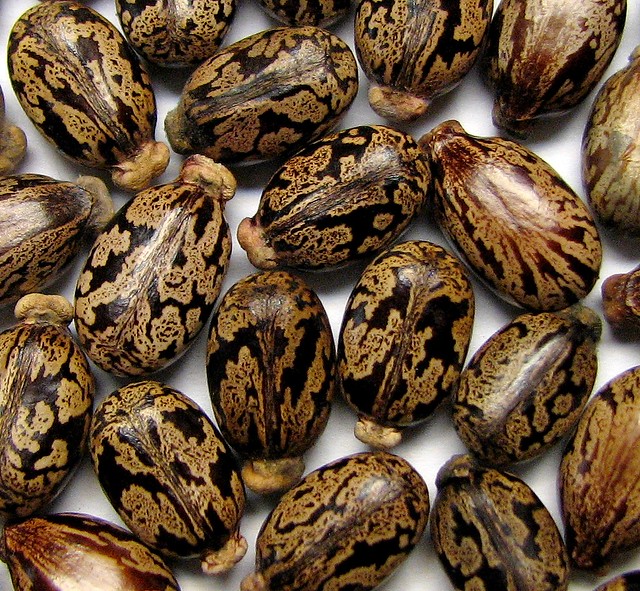
Castor oil, Ricinus communis, is a vegetable oil obtained from the castor bean. Castor oil is a colorless to very pale yellow liquid with mild or no odor or taste. It is a triglyceride in which approximately 90 percent of fatty acid chains are ricinoleic acid. If you are Haitian/Haitian-American, you may have grown up calling Haitian castor oil, l'huile palma christi, l'huile mascreti, or like me and my cousins...stinky oil thanks to its characteristic smell.
Growing up, my mother would rub this on my head when I had a headache, my throat when I had a sore throat, my knee when I sprained my knee, my scalp for hair growth....you get the gist. And yes....it always worked every single time.

It wasn't until I changed my lifestyle in my early adulthood that I come across something called "castor oil".  Castor oil kept popping up in my searches, so I decided to look into it even more. I found that it was especially popular in the Caribbean, specifically in Jamaica, and also in my beloved motherland, Haiti.

I ran to my mom to tell her about what I discovered. After talking a little bit more about this oil, she helped me realize that castor oil was none other than our beloved l'huile mascreti. I remember feeling so happy and proud.

Castor oil has such significance in Haitian culture. Every Haitian living in Haiti or the diaspora surely has at least 2 bottles of this oil sitting in their cabinet, probably with a brownish tape wrapping its permitter, in their bathroom sink, right next to their other bath products. Castor oil is always in our homes.
I want to add that even though Jamaican Black Castor Oil, otherwise known as "JBCO" in the natural hair community is the most talked about form of castor oil, it is in fact, the same as Haitian Castor oil in the sense that is derived from the same Castor beans.  The main difference between the two oils is the level of refinement. You can find castor oil at local beauty supply stores, health food stores, online retailers.


Castor Oil has been used both internally and externally for thousands of years due to its many wonderful health benefits. Since it can strengthen the immune system, Castor Oil is considered a great remedy to treat the following major illness and ailments:
  • General inflammation
  • Arthritis-related pains
  • Hair loss
  • Muscle Aches
  • Sunburns
  • Skin Abrasions
Suggested Use:
For hair growth: Apply directly to hair from root to tip. Leave on as a grease. Repeat weekly for best results.
For use as a hot oil hair treatment: Simply warm up castor oil in a small cup or bowl. Apply enough castor oil to cover all your hair on your head. Place a heating cap on your head and sit for 30min. Repeat weekly or biweekly for best results.
For use as Eyebrow/Eyelash Growth: Apply directly onto your eyelashes or eyebrows. Leave on. Repeat daily. You can expect a change in growth in about one month, with regular use.
For use as a Skin Moisturizer & to Eliminate Stretch Marks: Apply an ample amount directly onto desired area of skin and massage. Leave on. Do not rinse. Can be repeated daily or as desired.


In health,
Dr. Naika

The "Haitian Treasures" series was created by Dr. Naika over in 2012. This series explores the magnificent benefits and uses of Haiti's natural resources, which Dr. Naika calls "Haitian Treasures". In this series, Dr. Naika explores the tie between Haiti's natural resources and natural, traditional, and holistic healing.

This blog post was originally posted on Dr. Naika's lifestyle blog, Naika in Balance. Dr. Naika's work is copyrighted. Please do not copy or repost Dr. Naika's work without citing her content as the original source.